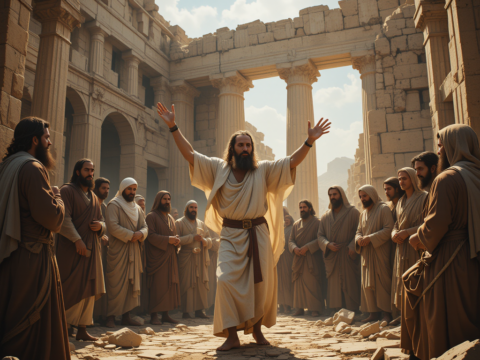
Implementing a structured process for maturity so your “hairy hunters” finally start acting like “tent-dwelling” scholars.
Genesis 25:19-34 – Inheritance and the Struggle of the Soul
Still Working On Sunday’s Message?
Inviting them to use our Bible Study and tools to build their ministries, we welcome every leader who is currently wrestling with the complexities of the Jacob and Esau narrative. Just as these two brothers struggled within the womb, we understand that the process of sermon preparation can often feel like a spiritual and intellectual battle. Our resources are designed to help you navigate the themes of birthrights, human impulsiveness, and divine sovereignty, ensuring you can move from the “struggle” of the study to the clarity of the pulpit.
- Unpacking the Weight of the Birthright
- Navigating the Conflict Between Jacob and Esau
- Streamlined Tools for Sunday Readiness
Ready to continue?
Introduction to the Text
In the tapestry of the Patriarchs, Genesis 25:19-34 serves as a pivotal transition from the life of Abraham to the turbulent legacy of his grandsons. After years of barrenness and fervent prayer, Isaac and Rebekah become the vessels for a promise that literally wrestles within the womb.
This passage introduces us to the foundational conflict between Esau and Jacob a conflict that transcends sibling rivalry to represent the eternal tension between the flesh and the spirit, the immediate and the eternal.
The Events of the Passage
The narrative begins with Isaac’s intercession for his wife, Rebekah, leading to the miraculous conception of twins. Before they are born, God reveals a prophecy: two nations are in her womb, and the older will serve the younger.
The birth of Esau, the rugged hunter, and Jacob, the quiet “heel-grabber,” sets the stage for a divided household. The passage culminates in a famous, high-stakes encounter where a famished Esau trades his sacred birthright his spiritual and material inheritance to his opportunistic brother Jacob for a simple bowl of red lentil stew, forever marking him as a man who despised his heritage for temporary relief.
The Scriptural Text: Genesis 25:19-34 (NIV)
19 This is the account of the family line of Abraham’s son Isaac. Abraham became the father of Isaac, 20 and Isaac was forty years old when he married Rebekah daughter of Bethuel the Aramean from Paddan Aram and sister of Laban the Aramean. 21 Isaac prayed to the Lord on behalf of his wife, because she was childless. The Lord answered his prayer, and his wife Rebekah became pregnant. 22 The babies jostled each other within her, and she said, “Why is this happening to me?” So she went to inquire of the Lord. 23 The Lord said to her, “Two nations are in your womb, and two peoples from within you will be separated; one people will be stronger than the other, and the older will serve the younger.”
24 When the time came for her to give birth, there were indeed twin boys in her womb. 25 The first to come out was red, and his whole body was like a hairy garment; so they named him Esau. 26 After this, his brother came out, with his hand grasping Esau’s heel; so he was named Jacob. Isaac was sixty years old when Rebekah gave birth to them. 27 The boys grew up, and Esau became a skillful hunter, a man of the open country, while Jacob was content to stay among the tents. 28 Isaac, who had a taste for wild game, loved Esau, but Rebekah loved Jacob.
29 Once when Jacob was cooking some stew, Esau came in from the open country, famished. 30 He said to Jacob, “Quick, let me have some of that red stew! I’m famished!” (That is why he was also called Edom.) 31 Jacob replied, “First sell me your birthright.” 32 “Look, I am about to die,” Esau said. “What good is the birthright to me?”
33 But Jacob said, “Swear to me first.” So he swore an oath to him, selling his birthright to Jacob. 34 Then Jacob gave Esau some bread and some lentil stew. He ate and drank, and then got up and left. So Esau despised his birthright.
Bible Study: The Cost of a Callous Heart
Friends, as we gather around this Word, we aren’t just looking at ancient family drama; we are looking into a mirror. For every leader here whether you are standing behind a pulpit or balancing the church books this text asks a haunting question: What are you willing to trade for a moment of comfort?
We see Isaac, a man of prayer, waiting twenty years for a promise to be realized. We see Rebekah, confused by the internal war of her pregnancy, seeking the Lord for clarity. But most importantly, we see the contrast between a “tent-dweller” who understood the value of the future and a “hunter” who lived only for the “now.”
In our ministry, the “stew” is always cooking. It might be the “stew” of popularity, the “stew” of taking the easy way out, or the “stew” of neglecting our spiritual health for the sake of “getting things done.” When we are famished by the stresses of leadership, we are at our most vulnerable. Let us study this text not to judge Esau, but to safeguard our own callings.
Expository Sermon Outline: Living for the Lasting
1. The Sovereignty of the Promise (Verses 19-23)
In this section, we see that the foundation of any ministry or family legacy begins with divine initiative and persistent prayer. Isaac waited two decades for the fulfillment of God’s word, reminding us that God’s timing rarely aligns with our microwave culture. The “jostling” Rebekah felt was a prophetic indicator that the path of the faithful is often marked by internal and external struggle. As leaders, we must recognize that the “nations” we are building are established by God’s sovereign choice and our willingness to inquire of Him when the pressure increases.
2. The Divergence of Character (Verses 24-28)
This portion highlights how our natural inclinations and household dynamics shape the environment of our mission. Esau was a man of the “open country” driven by instinct, physical prowess, and the immediate thrill of the hunt. Jacob was “content to stay among the tents,” a phrase often implying a more disciplined, reflective, and orderly life. The favoritism shown by Isaac and Rebekah serves as a warning to leaders: when we value “wild game” (outward results) over “the tents” (inner character and spiritual depth), we set the stage for systemic dysfunction within our organizations.
3. The Crisis of the Immediate (Verses 29-32)
Here, we witness the moment where physical exhaustion overrides spiritual conviction. Esau arrives “famished,” a state every bi-vocational pastor and busy leader understands all too well. His hyperbolic cry, “I am about to die,” is the voice of the flesh demanding instant gratification. When we are depleted, the “birthright” the long-term spiritual impact and intentionality of our work seems abstract and worthless compared to the “red stew” of immediate relief. This section challenges us to recognize when our “hunger” is leading us toward a disastrous compromise.
4. The Finality of the Trade (Verses 33-34)
The passage concludes with a sobering look at the consequences of devaluing our spiritual inheritance. Jacob’s opportunism is noted, but the biblical weight falls on Esau’s indifference. He ate, drank, got up, and left. The text explicitly states he “despised” his birthright. To despise something is not always to hate it; it is to treat it as common or insignificant. For the church leader, the danger is rarely a sudden move toward atheism; it is the slow, casual process of treating our sacred calling as something that can be bartered for a more comfortable, less demanding existence.
Application and Reflection: Guarding the Sacred in the Secular Rush
The Leader’s “Lentil Stew”
In the heat of ministry, the “red stew” isn’t always a blatant sin; often, it is simply the expedient over the essential. For the Bi-vocational Pastor, it might be the temptation to sacrifice sermon preparation for an extra hour of secular overtime. For the Church Board Member, it might be choosing a quick financial fix over a long-term, faith-based investment. We must ask ourselves: what are we currently “famished” for? If we are hungry for approval, we will trade our prophetic voice for a seat at the popular table. If we are hungry for “success” as the world defines it, we will trade our spiritual integrity for a larger spreadsheet.
- Identifying the Hunger: Recognizing when you are “famished” is the first step in preventing a bad trade.
- Valuing the Birthright: Your calling is not just a job; it is an inheritance that affects future generations.
Discussion Questions for Leadership Teams
To go deeper into this text during your next board or staff meeting, use these questions to spark an honest dialogue about the direction of your ministry:
- The “Jostling” in the Womb: What internal tensions are currently “wrestling” within our church or department? Are we seeking the Lord’s perspective on these conflicts, or are we simply trying to manage the symptoms?
- The Hunter vs. The Tent-Dweller: In our current strategic planning, are we behaving more like Esau chasing the immediate “kill” and reacting to our appetites or more like Jacob investing in the “tents” and the slow work of building a foundation?
- The High Cost of Exhaustion: Esau made his worst decision when he was tired and hungry. How are we supporting our leaders to ensure they aren’t making “stew-level” decisions out of burnout?
- The Despised Birthright: Is there any area of our ministry where we have become “casual” with the sacred? How can we move from just “getting through the service” to honoring the weight of our calling?
Conclusion: A Charge to the Faithful
Reclaiming Your Spiritual Heritage
Church leaders, let us not be a people who get to the end of our lives, look at our “stew,” and realize we have nothing left of our birthright but an empty bowl. The world is full of “skillful hunters” who can draw a crowd and “men of the open country” who know how to play the game. But the Kingdom of God is built by those who value the promise even when it is invisible.
- Stay in the Tents: Do the hard, quiet work of character development and spiritual discipline.
- Inquire of the Lord: Don’t just complain about the “jostling” in your ministry; take it to the One who ordained the struggle.
- Protect the Future: Remember that the decisions you make in your moment of “hunger” today will determine the “nations” that come out of your ministry tomorrow.
Closing Prayer
Heavenly Father, we thank You for the birthright we have received through Christ. Forgive us for the times we have looked at the immediate comforts of this world and considered them more valuable than Your eternal promises. Grant these pastors, leaders, and servants the strength to endure the “famine” without selling their souls. May we be a people who cherish our calling, guard our hearts, and build a legacy that lasts long after the stew has gone cold. Amen.
You’ve completed the Free Bible Study!
The complete sermon continues with verse-by-verse exposition, practical application, Christian discipleship, spiritual growth, pastoral insights, and a complete conclusion designed to help you preach and teach God’s Word with confidence.
Preparing messages every week?
Start your FREE 7-Day Trial of Pastor Essentials and receive:
-Three complete sermons every week
-Three complete Bible studies every week
– Expository outlines
– Leadership helps
– Practical ministry applications
– New resources added every week
After your free trial, membership is just $9.00 per month. Cancel anytime.
Need only today’s message?
Purchase The Sermon & Bible Study Here: $4.99
Below is a preview of this week’s paid sermon content, so you can see how the material is organized, presented, and prepared to support pastors, teachers, and lay speakers throughout the week.
The Sermon: Trading the Temporary for the Timeless
1. The Sovereignty of the Promise (Verses 19-23)
This section of the scripture reminds us that God’s plan for our lives begins long before we even take our first breath. When Isaac prayed for Rebekah, he wasn’t just asking for a child; he was participating in a divine legacy that had been set in motion generations earlier. Even when Rebekah felt the “jostling” and the struggle within her, God was already at work, orchestrating the future of nations. It shows us that God’s sovereign hand is always steady, even when our circumstances feel chaotic or confusing.
My personal thoughts on this are that we often get so caught up in the “struggle” of our current season that we forget who is in control of the “solution.” I’ve seen so many leaders get discouraged because they feel a conflict within their ministry or their family, but just like Rebekah, that tension is often a sign that God is about to do something big. We need to stop worrying about the fight and start wondering what God is birthing through it.
In my personal commentary, I see a beautiful picture of intercessory prayer here. Isaac prayed for twenty years before this promise was realized. Think about that two decades of waiting! Most of us give up after two weeks. This tells me that the strength of the promise is often tied to the persistence of the prayer. God isn’t ignoring you; He’s preparing the “nations” that are going to come out of your faithfulness.
Regarding personal commentary on Christian discipleship, this passage teaches us that following Jesus starts with an inquiry. When Rebekah felt the struggle, she “went to inquire of the Lord.” Discipleship isn’t about having all the answers; it’s about knowing where to go when you have the questions. A true disciple doesn’t lean on their own understanding but seeks the heart of the Father to understand the “why” behind the “what.”
My personal reflection commentary on spiritual growth is that growth often feels like a wrestling match. We want peace and quiet, but God often gives us “jostling.” Why? Because tension creates the capacity for something new. You cannot grow into the person God wants you to be without experiencing some internal pressure that forces you to seek His face and rely on His strength alone.
- Remember: We must trust God’s plan for our lives so that we can live our lives for God’s plan. When we stop trying to control the outcome and start trusting the Designer, we find the peace that surpasses understanding.
- Ask Yourself This Question? Am I more focused on the “jostling” of my current struggle or on the God who is sovereign over my future?
If you found this preview meaningful or useful, the complete sermon and weekly ministry resources are available to help you continue preparing, teaching, and serving with confidence.
Prepare with confidence every week.
Start your FREE 7-Day Trial of Pastor Essentials and receive every week’s three complete sermons, three Bible studies, leadership resources, and practical ministry tools.